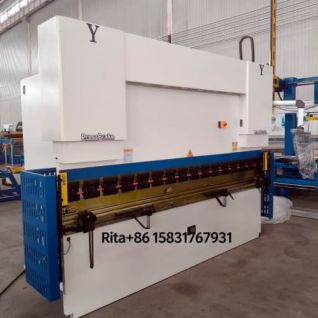
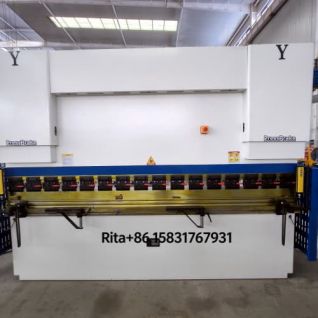
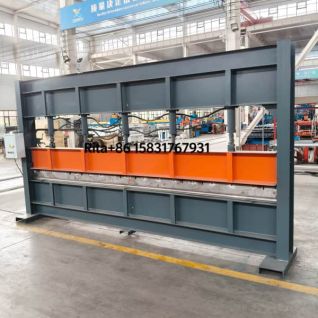
Bending Machine — Industrial Sheet Metal Press Brake for Precision Metal Forming
A bending machine, commonly known as a press brake or sheet metal bending machine, is a heavy-duty industrial machine designed to bend, fold, and form flat metal sheets and plates into precise angles, channels, and three-dimensional profiles. Driven by hydraulic, electric servo, or mechanical power systems, bending machines are the cornerstone of modern sheet metal fabrication — delivering repeatable accuracy across high-volume production environments and custom one-off manufacturing alike.
Types of Bending Machines
Our bending machine range covers four primary configurations, each engineered to meet specific production demands:
- Hydraulic Press Brake — The industry standard for heavy sheet metal bending. Synchronized dual-cylinder hydraulic drive delivers consistent bending force from 40T to 1,000T+, accommodating mild steel, stainless steel, and aluminum plates up to 25mm thick and 6 meters wide. Suitable for both standard production and custom fabrication.
- CNC Bending Machine — Fully computer-controlled press brake featuring automatic back gauge positioning, multi-step bending programs, and closed-loop feedback for micron-level repeatability. Ideal for complex part geometries, tight-tolerance components, and high-output production lines requiring minimal operator intervention.
- Electric Servo Press Brake — A modern, energy-efficient alternative that eliminates hydraulic oil entirely. Servo-driven ball screw mechanisms deliver fast ram speeds, precise stroke control, and up to 50% energy savings compared to conventional hydraulic models. Best suited for precision light-gauge bending and environmentally sensitive facilities.
- Manual Bending Machine — A practical, low-investment solution for small workshops, vocational training centers, and low-volume fabrication tasks. Manually operated without hydraulic or electrical power, suitable for thin sheet metal and straightforward angle bending applications.
Key Technical Specifications
When selecting a sheet metal bending machine, the following parameters define machine capability and application fit:
- Nominal Tonnage: 40T — 1,000T (determines maximum bending force for given material and thickness)
- Bending Length: 1,000mm — 6,000mm (must exceed the widest sheet to be processed)
- Maximum Sheet Thickness: 0.5mm — 25mm (varies by material type and machine tonnage)
- Back Gauge Stroke: 500mm — 1,500mm (controls flange length accuracy)
- Control System: E21 / DA-53T / Delem DA-66T / Full Graphic CNC
- Tooling System: European-style precision ground punch and die sets
Industrial Applications
Bending machines serve as essential production equipment across a wide range of manufacturing sectors:
- Electrical switchgear cabinets and control panel enclosures
- HVAC ductwork, air handling units, and ventilation systems
- Automotive body panels, chassis brackets, and structural reinforcements
- Steel structural profiles, construction brackets, and support frames
- Commercial kitchen equipment, refrigeration units, and food processing machinery
- Architectural cladding, curtain walls, roofing systems, and facade elements
- Storage racks, shelving systems, and industrial material handling equipment
Frequently Asked Questions About Bending Machines
What is a bending machine?
A bending machine (press brake) is an industrial machine that uses a punch and die system to apply controlled force onto sheet metal, bending it into precise angles and profiles. It is fundamental equipment in any sheet metal fabrication facility.
What materials can a bending machine process?
Bending machines can process mild steel, stainless steel, aluminum, copper, brass, and galvanized sheet metal. Maximum processable thickness ranges from 0.5mm to 25mm depending on machine tonnage and bending length.
How do I choose the right bending machine for my application?
Select a bending machine based on four key factors: (1) material type and maximum sheet thickness, (2) required bending length, (3) production volume and automation requirements, and (4) bend complexity. For high-precision or high-volume production, a CNC press brake is strongly recommended. For general fabrication, a hydraulic press brake offers the best versatility and value.
What is the difference between a hydraulic and a CNC bending machine?
A hydraulic bending machine uses a hydraulic cylinder system to generate bending force and is controlled manually or with a basic numeric controller. A CNC bending machine integrates a full computer control system with programmable back gauge, automatic tool selection, and multi-step bending sequences — delivering higher precision and repeatability for complex production requirements.